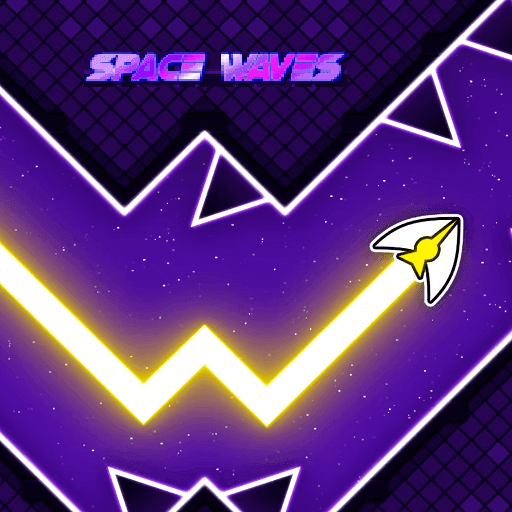
Perhaps the player initiated a turn too late, entered a gap at an awkward angle, or positioned their vehicle in a way that made the subsequent move difficult. Each scenario offers distinct information. If players view failure solely as a negative outcome, they might repeat the same actions without change; however, by treating each collision as a data point, their practice becomes more purposeful. A challenging section might require numerous attempts before a player fully grasps the necessary maneuvers. Initially, attention is often focused simply on survival. Later, players begin to identify critical points that allow for advance preparation. Next, they might experiment with the timing of their inputs. If that fails, they adjust their starting position or trajectory. Gradually, an effective sequence of actions emerges—not because the game provided specific instructions, but because the player constructed it through experience. This type of progression is ideal for arcade-style games, where the interval between failure and the next attempt is brief. Players do not have to wait long to test a new hypothesis; if one approach proves ineffective, they can quickly try another. It is this rapid iteration that makes the practice process continuous. “Space waves,” therefore, do not necessarily need to rely on an abundance of secondary systems to motivate players; the act of conquering a previously challenging area can serve as its own reward. As players begin to recognize familiar flight patterns and navigate them with greater precision, a sense of mastery naturally emerges. Each failure is no longer merely a lost attempt, but rather a step toward a deeper understanding of the game.
Space Waves fosters replayability through a hallmark of the arcade genre: players can always find a fresh reason to start over. Initially, the goal might simply be to grasp the mechanics and clear the basic zones. Later, the objective shifts toward pushing further, navigating a tricky section more consistently, or minimizing errors. Once familiar with the course, players can focus on the quality of their inputs rather than just the final outcome. A satisfying run isn’t defined solely by distance; it can also be one where the player feels a strong sense of control over their movement. This opens the door to various personal challenges: some aim to clear as many obstacles as possible, others seek to conquer a zone that previously stumped them, while some prefer to drill a specific segment until the movements become second nature. Because players define their own goals, replay value doesn’t rely on the game constantly doling out new rewards. Personal achievement itself becomes a driving force. Recalling past failures in a particular area makes successfully navigating it later feel like tangible progress. Subsequent playthroughs offer a different experience than the first, as players bring accumulated experience with them. A gap that once caused hesitation might now be cleared instinctively; a chaotic stretch can be broken down into manageable, logical steps. This evolution serves as direct evidence of the learning process. Consequently, space waves appeals to those who value games where personal skill plays a pivotal role in the outcome. Without relying on complex systems, the game keeps players coming back with a simple yet compelling question: can I do better this time than I did before? That question transforms every playthrough into an opportunity to test new capabilities. As players set their own limits and gradually surpass them, the journey through “Space Waves” can extend far beyond a mere single completion.
Sorry, no records were found. Please adjust your search criteria and try again.
Sorry, unable to load the Maps API.
