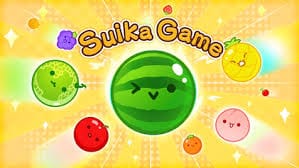
If you told me a few months ago that I’d spend an entire evening watching fruit drop into a box, I’d have laughed. If you told me I’d enjoy it — that I’d feel genuine triumph when two melons finally kissed and a giant watermelon appeared — I’d have gently backed away from you. Yet here we are. The watermelon puzzle game that swept across Japan, then TikTok, then the entire internet, has sunk its hooks into millions of players, and I’m one of them.
Let’s talk about what makes this simple, silly, utterly addictive game work — and how you can actually get good at it without losing your mind.
What Even Is This Game?
Suika Game drops fruits into a rectangular container. That’s it. That’s the whole premise. Except — when two identical fruits touch, they merge into the next fruit up the chain. Cherry meets cherry? You get a strawberry. Two strawberries collide? A grape appears. Keep going: dekopon, persimmon, apple, pear, peach, pineapple, melon… and finally, the legendary watermelon.
There are eleven stages of fruit evolution, and your goal is twofold: score as many points as possible before the fruits overflow past the danger line, and — if you’re feeling ambitious — create that glorious watermelon at least once before the container inevitably chaos-bombs.
The container has walls. The fruits obey physics. There are no power-ups, no timers, no combos to tap. It’s just you, gravity, and your questionable decision-making skills.
The Sweet Spot Between Strategy and Chaos
Here’s the thing about Suika Game that separates it from every other puzzle game I’ve played: you cannot predict the outcome of your own move.
In Tetris, a piece lands where you put it. In Candy Crush, swaps behave deterministically. But in Suika Game, fruits bounce. They roll. They wedge themselves into impossible angles. You aim for the gap between a grape and a dekopon, and what you get is a cherry ricocheting off three walls and landing absurdly on top of your carefully arranged half-built melon zone.
This randomness is not a bug — it’s the entire point.
The game asks you to think ahead but punishes you for over-planning. It rewards adaptation, not perfection. The best players don’t try to control everything; they orchestrate probabilities. Drop fruit into a general area, let physics do its thing, then react. It’s like herding cats, if cats were spherical and came in fruit flavors.
That’s why “one more round” syndrome is so real here. Each loss teaches you something. Each run is different. And when a chain reaction goes exactly right — when three merges pop in sequence and half the container clears in one beautiful cascade — you feel like a genius. It’s pure, unearned joy, and it’s fantastic.
Tips From Someone Who’s Lost Many Rounds
I’m not a Suika Game pro. I’ve never hit a million points. But I’ve lost enough times to know what works and what absolutely doesn’t. Here’s what I’ve learned:
1. Big fruits go on the sides, small fruits go in the middle
This is the most common advice, and it’s the most important. If you drop a pineapple in the center, it’ll block small fruits from rolling into merge positions. Keep the center open with small fruits (cherries, strawberries, grapes) so they can find each other naturally. Wall-hug your big fruits — they’ll stay put and wait for their match.
2. Don’t panic-drop
When you see a gap open up after a merge, your instinct is to fill it immediately. Don’t. Pause for two or three seconds. Watch the remaining fruits settle. Sometimes a gap closes on its own as other fruits shift. Sometimes a well-delayed drop triggers a chain that fills the gap for you. Patience is worth way more than speed.
3. Know when to walk away from a perfect setup
This one hurts. You’ve arranged two melons next to each other, waiting for that perfect moment. But the pile above them is getting dangerous. The container is wobbling. At some point, you have to accept that a smaller merge now is better than risking an overflow trying to set up the watermelon. Points scored are better than points dreamed about.
4. Play with sound
I cannot fully explain why, but the sound design in Suika Game is part of the magic. The satisfying thump of a merge, the soft roll of a cherry bouncing off a pear — it’s ASMR-level pleasant. Turn it on. It makes the losses hurt less.
5. Embrace the chaos
The single biggest skill in Suika Game is learning to laugh when everything goes wrong. A cherry will find the one pixel of space you didn’t mean to leave open. A well-aimed grape will boing off a dekopon like it’s offended by your strategy. This is fine. The game is supposed to be a little ridiculous. Play it that way.
Why It Works
Suika Game succeeds because it asks very little of you and gives back a surprising amount. No login. No daily rewards. No battle pass. No FOMO. Just a container, some fruits, and physics that feel just random enough to keep you guessing.
It’s the kind of game you play while listening to a podcast, or during a 10-minute break, or late at night when you should be sleeping but you swear this next round is the one where you finally get that watermelon.
And honestly? It might be. That’s what keeps you coming back.
So click over to Suika Game, drop a cherry, and see where the chaos takes you. Just don’t blame me when you look up from your screen and realize it’s 2 AM.
Sorry, no records were found. Please adjust your search criteria and try again.
Sorry, unable to load the Maps API.
